
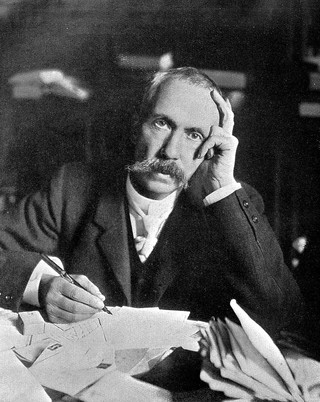
Charles Richet and the Question Science Could Not Close
Charles Richet occupies a singular position in the history of science. As a Nobel Prize–winning physiologist, his scientific credibility was beyond dispute. At the same time, his decision to investigate phenomena that challenged materialist assumptions placed him at the edge of accepted inquiry.
Richet did not approach anomalous phenomena as a mystic or a believer. He approached them as a scientist confronted with observations that resisted reduction to known sensory, psychological, or physiological mechanisms.
In doing so, he reached a frontier that modern science has largely chosen not to cross.
A Scientist at the Limits of Materialism
In 1913, Richet was awarded the Nobel Prize in Physiology or Medicine for his discovery of anaphylaxis—a foundational contribution to immunology. He was a rigorous experimentalist, deeply rooted in empirical methodology.
Yet Richet refused to impose an arbitrary boundary on scientific inquiry. When confronted with carefully observed phenomena such as telepathy, materializations, and veridical information emerging under controlled conditions, he chose neither belief nor outright dismissal.
Instead, he adopted a position of critical suspension combined with continued investigation. To designate this domain, he introduced the term metapsychics—phenomena appearing to lie beyond established psychological and physiological explanations, without presupposing their ultimate nature.
Survival Without Assumptions
Richet was explicit in rejecting premature conclusions. He did not claim that survival of consciousness had been proven. Nor did he align himself with the spiritualist interpretations common in his era.
At the same time, he was equally clear that certain observed facts remained unexplained. The appearance of coherent, specific information not traceable to known cognitive or sensory channels posed genuine difficulties for reductionist accounts.
For Richet, the integrity of science depended not on defending assumptions, but on honestly confronting recalcitrant data.
From Metapsychics to the Validation Problem
This project did not originate in theoretical speculation. It emerged over many years of engagement with the same empirical frontier Richet himself confronted—where observation consistently raised a single unavoidable issue.
Long before psychological language or metaphysical interpretation entered the picture, the decisive problem had already become clear: any serious inquiry into survival of consciousness would stand or fall on the question of validation.
Richet recognized anomalies, but lacked the methodological means to determine whether identity, memory, and continuity could be empirically stabilized and critically verified. He reached the problem, but could not resolve it.
It was within this Richetian field of inquiry that the validation requirement first became unavoidable. Psychological interpretation came later.
The Later Contribution of Jung
Carl Jung later provided a powerful psychological framework for understanding responsibility, identity, unconscious dynamics, and the dangers of unexamined psychic forces.
Jung introduced the concept of the psychoid as a theoretical bridge between psyche and matter, acknowledging that consciousness might not be fully reducible to biological processes. However, this remained a conceptual hypothesis rather than a validated model.
Jung supplied language and perspective—but the methodological demand had already been encountered earlier, in the empirical terrain Richet exposed.
From Richet to Method
Spirit ID emerged from this sequence—not as a reinterpretation of Richet, and not as a Jungian extension, but as an attempt to address the unresolved requirement both left open.
The task is narrowly defined and deliberately demanding: to determine whether individual consciousness, if it survives biological death, can be identified, differentiated, and subjected to critical verification.
Where Richet documented phenomena and Jung articulated psychological consequences, Spirit ID introduces method. Here, Metapsychics Science™ formally emerges as a new field—positioned at the intersection of metapsychics and psychology—defined by the requirement of empirical validation of individual consciousness beyond biological death.
Letting the Frontier Remain Open
Richet understood that not all scientific questions mature at the same pace as available tools. Some questions must wait.
But they must not be erased.
Revisiting Richet today is not an attempt to retroactively validate his conclusions, but to continue responsibly where he was forced to stop— with clearer criteria, stricter methodology, and openness to whatever results emerge.
Some frontiers close through resolution. Others remain open because they were never truly crossed.
Richet stood at such a frontier.
References
- Richet, C. (1923). Thirty Years of Psychical Research. Macmillan.
- Richet, C. (1905). Traité de Métapsychique. Félix Alcan.
- Alvarado, C. S. (2006). Charles Richet and the Concept of Metapsychics. Journal of Scientific Exploration.